
Make Older Rooms Work Harder Without Losing Their Charm
Older Richmond homes often come with features worth preserving, like tall windows, original trim, fireplaces, and hardwood floors. They can also come with small closets, shallow alcoves, odd corners, and room layouts that were never meant to handle today’s storage needs. The good news is that you do not have to choose between keeping historic character and making your home easier to live in.
Built-in storage and freestanding furniture can both solve clutter problems, but they do it in different ways. We help homeowners think through how they use each room, what they need to store, and whether they want a permanent feature or a movable piece. A custom bookcase below a window may make great use of an unused nook, while an armoire may be a better fit for a room that changes often.
At Fix & Paint, we work on painting, repairs, and custom carpentry in older Richmond-area homes. Whether you choose built-ins, furniture, or a mix of both, careful planning and solid preparation help the finished space feel intentional instead of added on.
Built-Ins Can Look Like They Belong
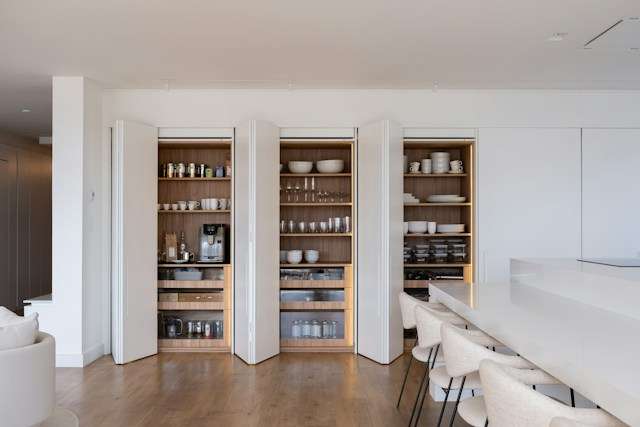
Built-ins turn overlooked areas into useful storage without taking up more room than necessary. Narrow hallways, chimney-wall recesses, under-stair spaces, bay windows, and awkward alcoves are often poor fits for standard furniture. Custom shelves, cabinets, benches, and window seats can make those areas useful while keeping walkways open.
The best built-ins feel connected to the rest of the home. Through residential custom carpentry services, we can create storage that complements existing baseboards, crown molding, door casings, and painted finishes. Details such as inset doors, beadboard backs, furniture-style toe kicks, and simple trim profiles can help new work sit comfortably beside older features.
Built-ins can be especially helpful when you need storage in a high-use space, such as:
- A living room with books, media, and everyday clutter
- A home office that needs closed storage for supplies
- An entryway that collects shoes, bags, and outerwear
- A bedroom with limited closet space
- A mudroom that needs a bench and cubbies
Before any installation begins, we look closely at the wall and the surrounding area. Older homes may have uneven surfaces, worn trim, damaged drywall, settling cracks, or moisture-related wood damage. Electrical outlets, HVAC vents, windows, and doors also need to be considered. Repairing those issues first gives new carpentry a stable base and helps the final finish last.
Freestanding Furniture Leaves Room to Change Your Mind
Freestanding furniture remains a practical option when flexibility matters most. Armoires, sideboards, bookcases, chests, storage cabinets, and modular shelving can add useful storage without changing the home’s structure. If you enjoy moving furniture around, expect to move in the future, or are still deciding how a room should function, a movable piece may make more sense.
Furniture can also bring warmth and personality to a historic room. A vintage hutch can work beautifully near original hardwood floors. A painted cabinet may add color to a room with plaster walls and tall windows. A simple bookcase can balance a fireplace wall without making the room feel too formal or fixed.
Still, freestanding storage has limits. It uses floor space, often leaves gaps above and beside the piece, and can make a smaller room feel crowded. In homes with uneven floors or walls that are not perfectly straight, placement may take extra care. Tall pieces may also need to be secured to the wall, especially when children or pets are part of the household.
We often encourage you to think beyond the clutter you see today. One cabinet may solve a temporary problem, but a growing family, a work-from-home routine, or a busier entryway can change what the room needs. Freestanding furniture works best when the ability to adapt matters more than making use of every inch.
Compare Space, Condition, and Long-Term Use
The right choice usually comes down to how the room works now and how you expect it to work later. Built-ins are tailored to the room’s exact shape. They can run from floor to ceiling, fit around windows, or fill a narrow corner that would otherwise go unused. That makes them a strong fit for compact bedrooms, small living rooms, home offices, and entryways.
Freestanding furniture is often easier to swap out when your style changes or a room gets a new purpose. A sideboard in a dining room can later move to a hallway. A cabinet used for school supplies can become storage for linens or games. That adaptability is valuable in rooms that do not have one fixed job.
Before choosing either option, it helps to make a simple wish list. Include:
- What you need to store and how often you use it
- Which items should stay hidden and which can be displayed
- The wall space and floor space available
- The paint or stain finish you prefer
- Whether the room’s purpose may change over time
Condition matters just as much as style. Damaged drywall, loose baseboards, cracked trim, and wood rot near an exterior wall should be addressed before new storage goes in. Covering those problems with cabinetry or placing furniture in front of them may hide the issue for a while, but it does not create a lasting result. We focus on repairs and preparation first, then build or finish around a sound surface.
Plan Before Indoor Routines Get Busier
Late summer is a good time to notice which spaces feel crowded before more time shifts indoors. As fall approaches, coats, backpacks, school papers, games, books, and seasonal décor can pile up quickly. Planning storage early gives you time to consider the room’s layout, choose finishes that work with existing details, and coordinate carpentry with interior painting.
A few well-placed changes can make daily routines easier. An entry bench with cubbies can create a landing place for bags and shoes. Living room shelving can hold books and display favorite items. A dining room cabinet can reduce kitchen overflow before gatherings, while an armoire or bedroom built-in can ease pressure on a small closet.
The strongest storage plan is not always built-in or freestanding. In many older homes, the best answer is a combination: permanent storage in difficult, high-traffic areas and movable furniture where flexibility still matters. Start with what creates daily clutter, identify underused spaces, and choose a solution that fits both the home’s character and the way you live in it.
Make Every Inch of Your Home Work Harder
Fix & Paint can help turn overlooked areas into practical, well-crafted storage that complements your home. Our residential custom carpentry services are designed around your space, daily routines, and existing architectural details. For a tailored recommendation, contact us to discuss your project.